
The oldest rocks in Italy, with a canyon inside them
No volcanoes, no earthquakes, and coasts that change face every fifty kilometres.
Sardinia is a fragment of an ancient continent, detached from Provence and rotated into its present position between twenty and fifteen million years ago. Its basement is Palaeozoic granite and schist, that is to say rock that was already hundreds of millions of years old when the Alps did not exist. Almost everything else follows from that.
The mountains
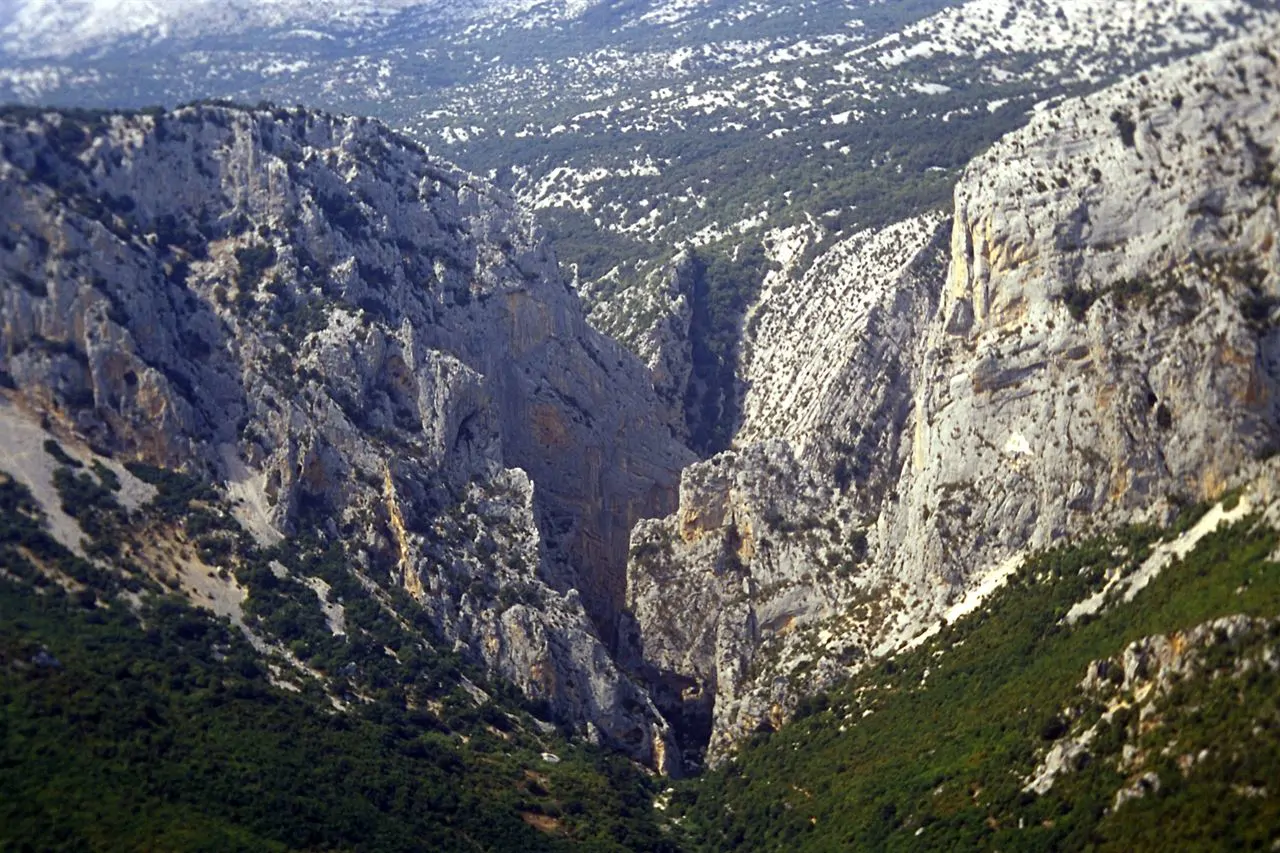
The Gennargentu is the central massif and reaches 1,834 metres at Punta La Marmora: it is not high, but it is vast and bare, covered in pasture and scrub. Around it lies the Supramonte, a limestone tableland riddled with caves and cut by gorges, which drops sheer into the Gulf of Orosei. The Gorropu gorge, between Urzulei and Orgosolo, has walls up to four hundred metres high and is one of the deepest in Europe.
The limestone and the caves
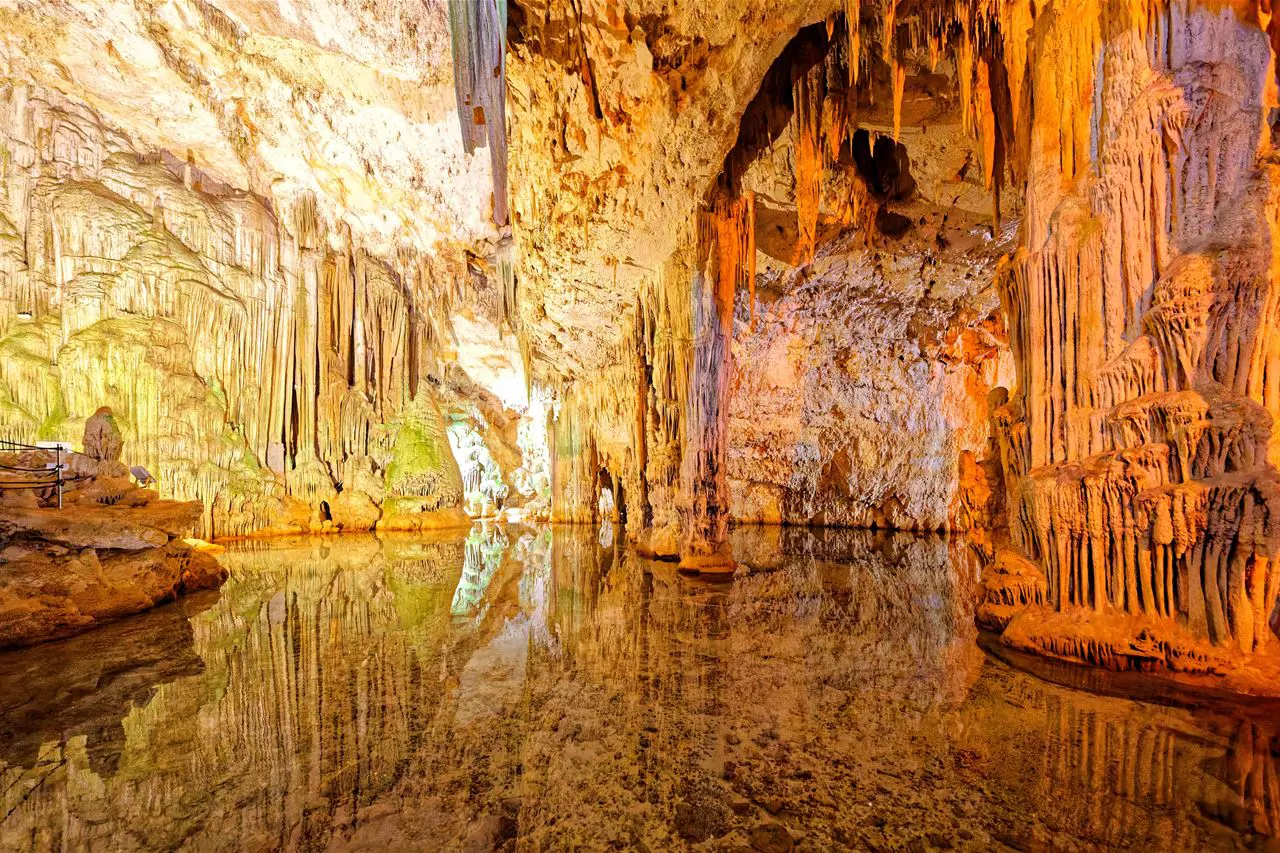
Where there is limestone the water has dug: the Sardinian cave system is among the richest in Italy. The Grotta di Nettuno below Capo Caccia is reached from the sea or by a stairway of six hundred and fifty-four steps cut into the cliff; the Grotta del Bue Marino, on the Gulf of Orosei, was the last Italian refuge of the monk seal.
The coasts
One thousand eight hundred and ninety-seven kilometres, more than any other Italian region. In the north the Gallura is made of granite carved by the wind; in the east the cliffs of the Gulf of Orosei drop straight into the water and some coves are reached only by boat or on foot; in the west and south there are dunes, lagoons and beaches kilometres long, some of white quartz like Is Arutas.
Inland
Between the mountains and the coasts lie the tablelands: the Giara di Gesturi with its half-wild horses, the Sarcidano, the Planargia. They are country of basalt and cork oak, with very few people and a great many sheep: the island has about three million, nearly half of all those in Italy.