
An island that is old, empty and has a language of its own
A million and a half inhabitants across twenty-four thousand square kilometres.
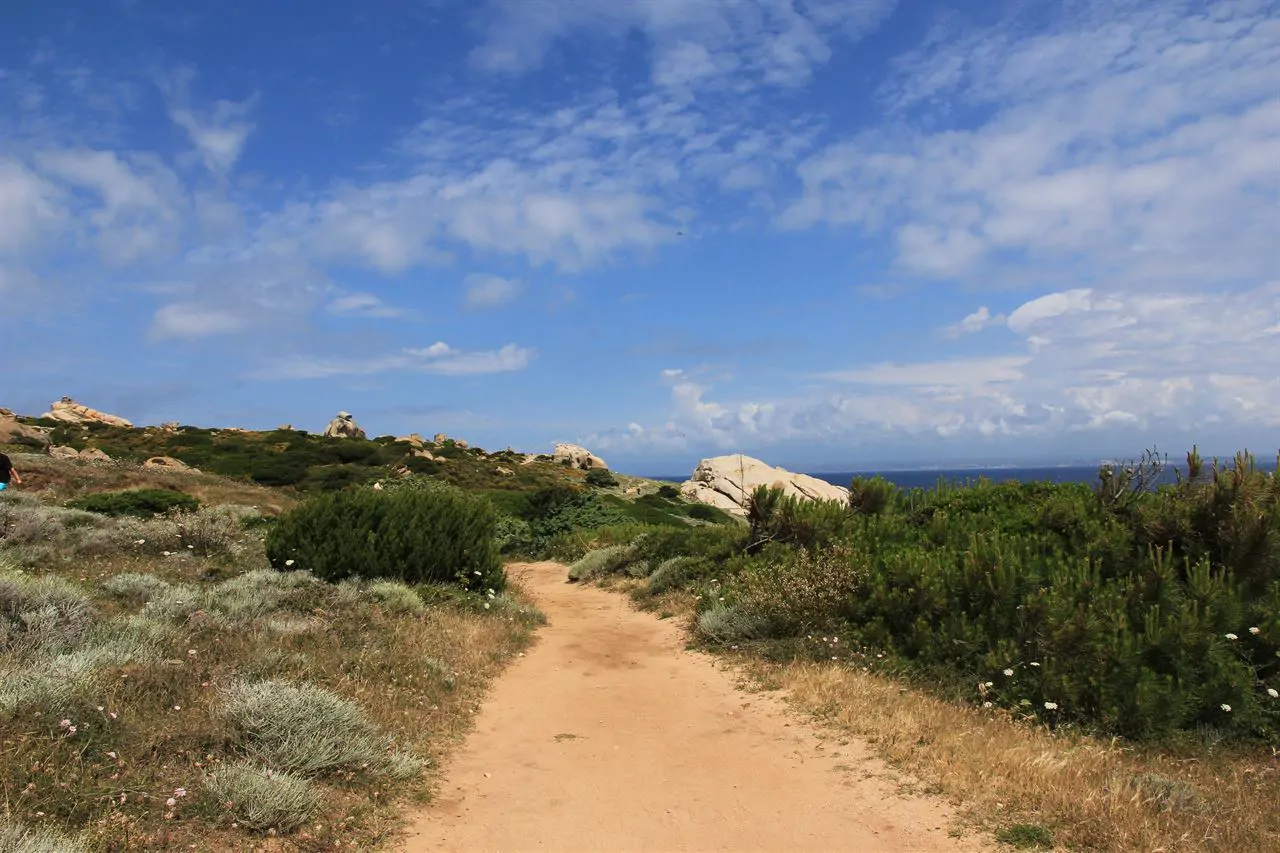
Sardinia is the oldest land in Italy: its rocks are hundreds of millions of years older than the Alps, and there is neither an active volcano nor an earthquake worth mentioning. It is also the emptiest region after Valle d'Aosta, with sixty-six people per square kilometre, and you feel it as soon as you leave the main roads.
How it is laid out
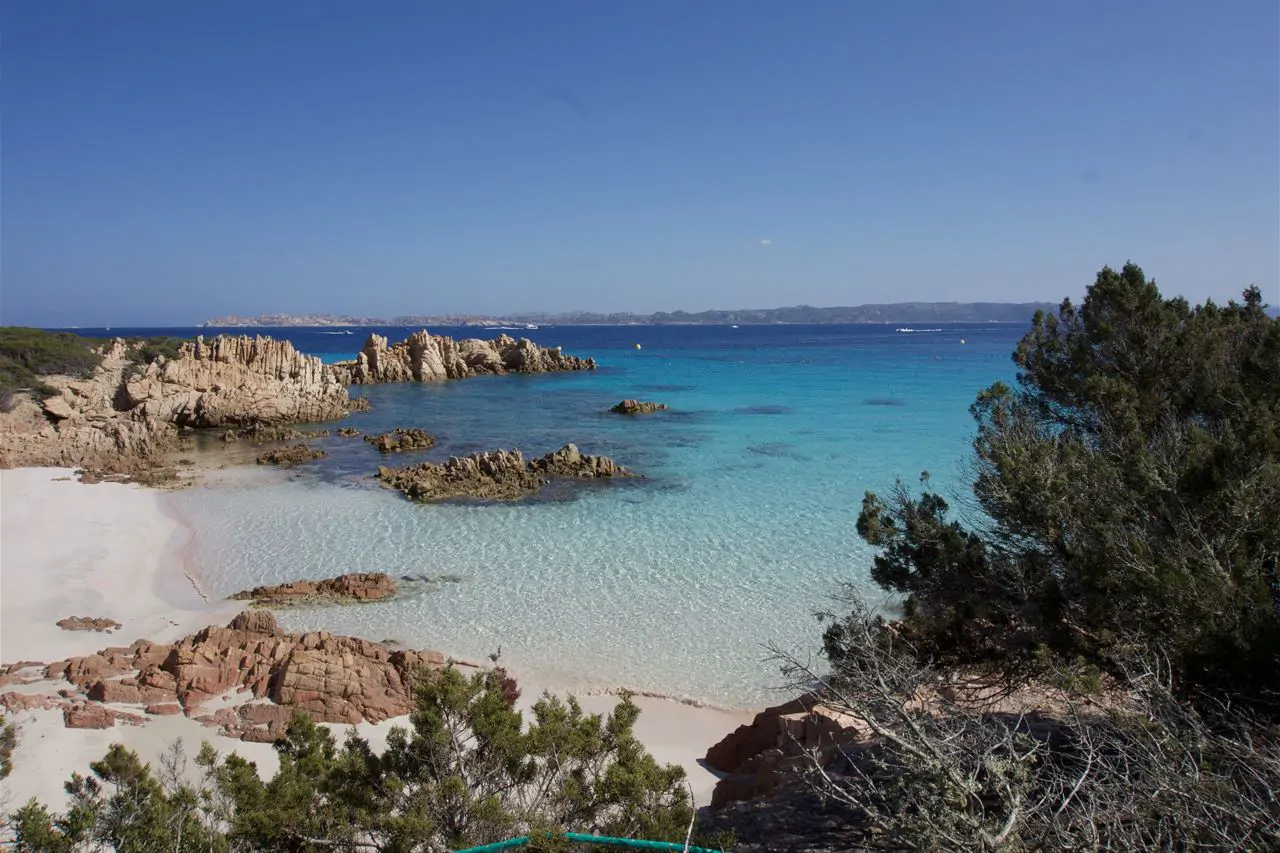
The island has a simple structure: two mountain blocks, the Gennargentu in the centre-east and the Sulcis hills in the south-west, separated by plains and tablelands. The Campidano, between Cagliari and Oristano, is the only large plain. The coasts are very high in the east, low and sandy in the west and south, granite and broken in the north.
Sardinian is not an Italian dialect but a Romance language in its own right, recognised by law, and it is not the island's only one: Catalan has been spoken at Alghero since the fourteenth century, at Carloforte and Calasetta a Ligurian brought from Tabarka, and in the Gallura and at Sassari two speeches closer to Corsican than to Sardinian.
Where the campsites are
On the coast. The largest group is in the north, between Santa Teresa, Palau, Badesi and the Alghero area; the second on the eastern shore, from Siniscola to Bari Sardo, facing the Gulf of Orosei. Inland there are almost none: the Barbagia is visited for the day, not camped in.
The sea here is a recent business: for centuries the Sardinians looked at the mountains.
Something that explains why the old villages are nearly all inland
How to plan it
The island is big: from Santa Teresa to Cagliari is three hundred kilometres and four hours. It is worth picking one quadrant and staying in it. The main roads are good, but the inland ones are slow, and the times the maps give need increasing.
In August the ferries and the northern campsites fill up and the prices rise a great deal; in June and September the water is the same and there is room. From October to May nearly everything is closed.