
The south-west and the mines
A century of lead and zinc, and now a geomining park on the sea.
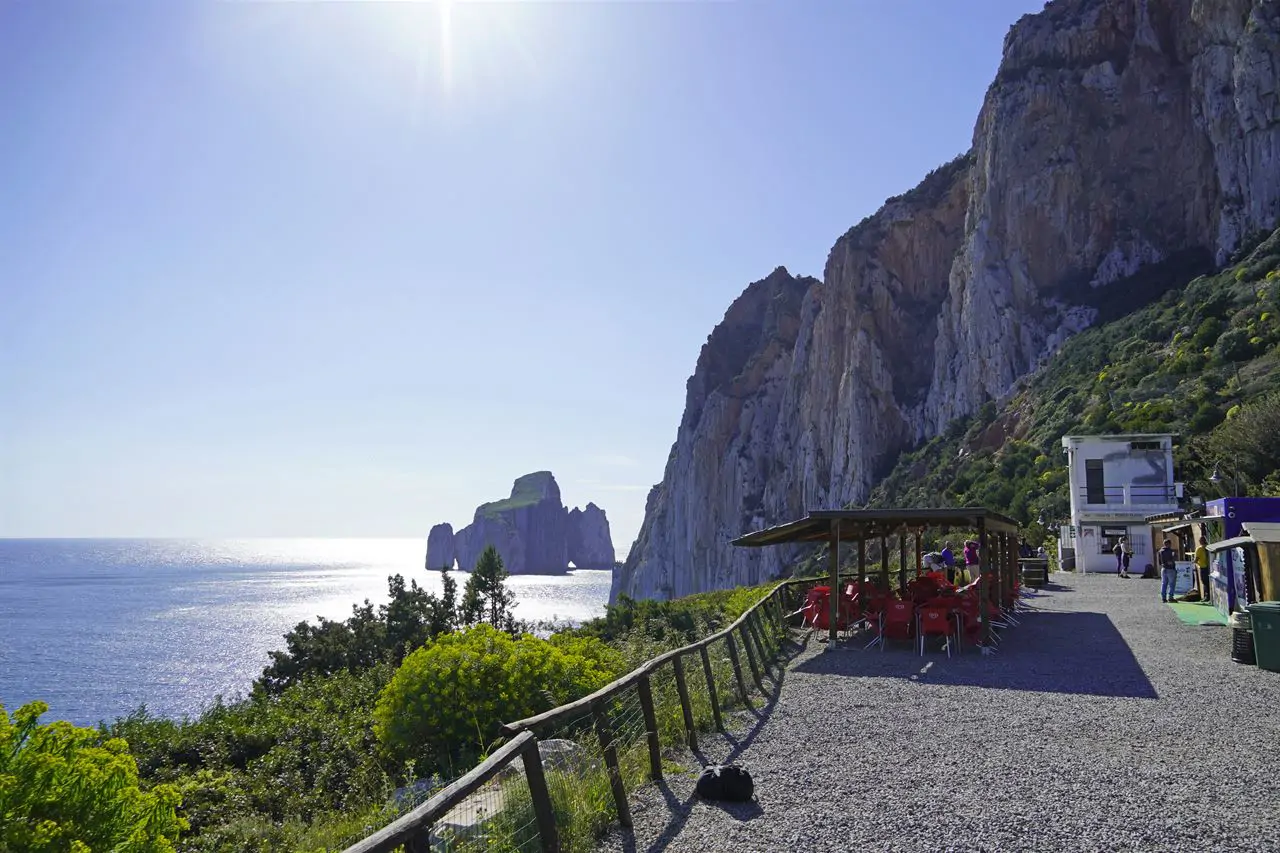
The Iglesiente and the Sulcis, in the south-western corner, were for a century the most important mining district in Italy: lead, zinc, silver and coal, with tens of thousands of people working underground. The mines nearly all closed between the nineteen seventies and nineties, and what remains has become a geomining park.
Porto Flavia, cut in 1924 into the cliff at Masua, is the most striking thing: two galleries one above the other, six hundred metres long, that carried the ore straight into the holds of the ships, with a belt that came out sheer above the sea. It is visited with a guide, and in front of it stands the stack of Pan di Zucchero, a hundred and thirty-three metres high.
The Costa Verde
Further north, between Arbus and Piscinas, the coast is almost uninhabited: dunes up to sixty metres high, the tallest in Europe, with junipers growing on them and Sardinian deer passing through. You get there on an unsurfaced road, and there is nothing there but the beach.
Offshore lie two inhabited islands: Sant'Antioco, joined to the mainland by a Roman isthmus, and San Pietro, where at Carloforte a Ligurian dialect is spoken, brought in the eighteenth century by a colony from Tabarka. Campsites here are few and stand around Sant'Antioco and on the coast to the north.