
The nuraghi
Seven thousand stone towers built by a people whose name we do not know.
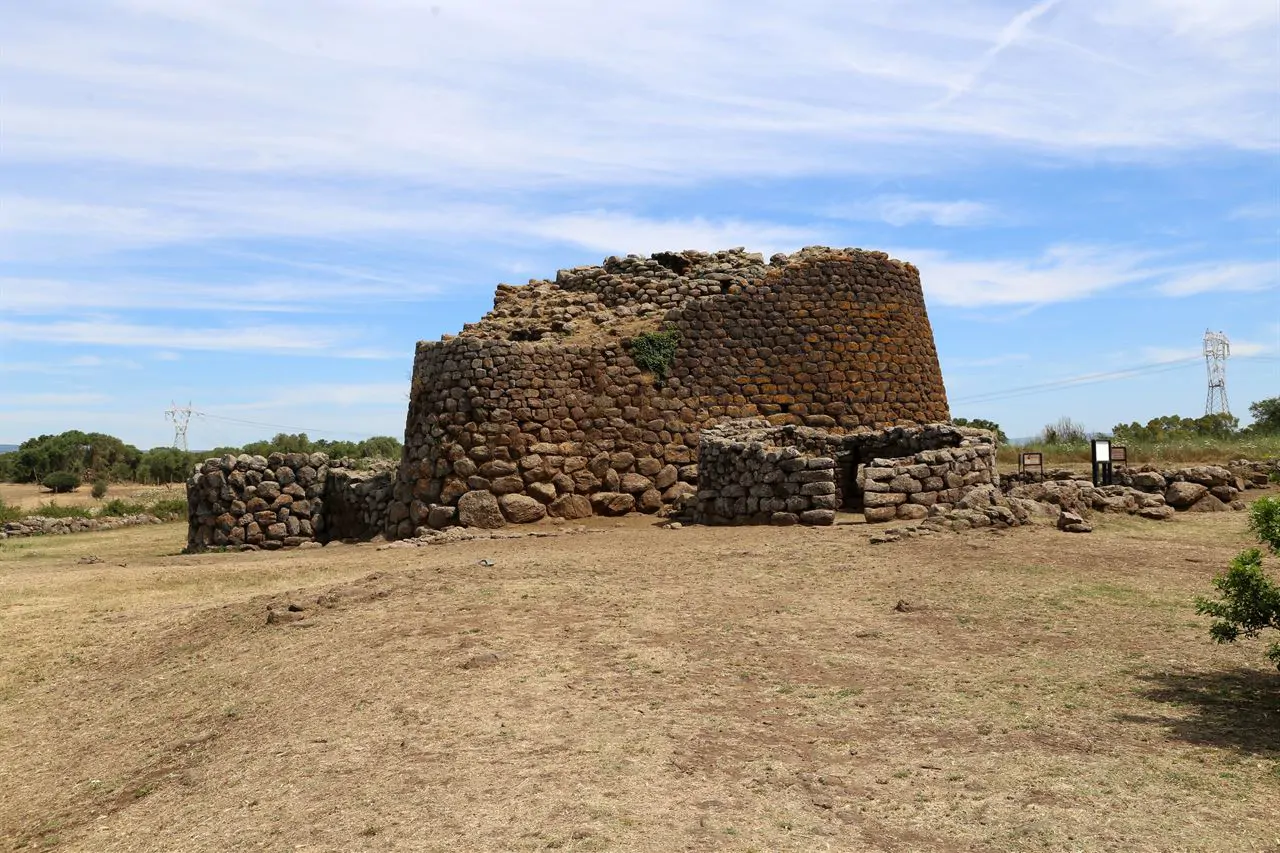
Between 1800 and 700 BC thousands of truncated conical towers of dry stone were built in Sardinia: about seven thousand are counted, and there were probably twice as many to begin with. We do not know what the people who made them called themselves, nor for certain what the towers were for: fortresses, stores, places of worship, chiefs' houses. Probably all of these.
Su Nuraxi at Barumini is the most studied and has been Unesco heritage since 1997: a central tower of the fifteenth century BC, four corner towers added later, and around them a village of round huts. It is visited only with a guide, and the visit takes an hour.
The others
The nuraghe Losa at Abbasanta and the Santu Antine at Torralba are almost as large as Barumini and far less crowded. Then there are the giants' tombs, collective burials with a central stele, and sacred wells such as Santa Cristina at Paulilatino, built with a precision one does not expect from the Bronze Age.
The nuragic bronzes, figurines a few centimetres tall showing archers, chieftains and little ships, are nearly all in the archaeological museums of Cagliari and Sassari. They are the closest thing to a portrait that civilisation has left us.